Designing neighbourhoods to foster healthy living.
Field research for Singapore's Ministry of Healthcare Transformation, mapping how a neighbourhood shapes the way people live, and turning it into problem statements a pilot could act on.
Role
Architecture Assistant (User Researcher)
Responsibilities
Environmental Audit, Semi-Structured Interviews, Community Needs Assessment, Data Analysis, Validation
The Ministry of Healthcare Transformation (MOHT) aims to reshape Singapore's healthcare system by addressing long-term health issues through pilot initiatives. Focusing on four key health behaviours — Physical Activity, Healthy Eating, Socialisation, and Sleep — MOHT engaged our team, Collectively Ours (COLOURS), in Phase 1 to understand how neighbourhood determinants influence these behaviours. Our goal was to gather insights to inform future intervention designs and validate determinant indicators.
This case study covers a portion of the research process — environmental audits, resident interviews, and community validation — in identifying key patterns and opportunities.
Problem discovery
Healthy living is more than exercising and eating well.
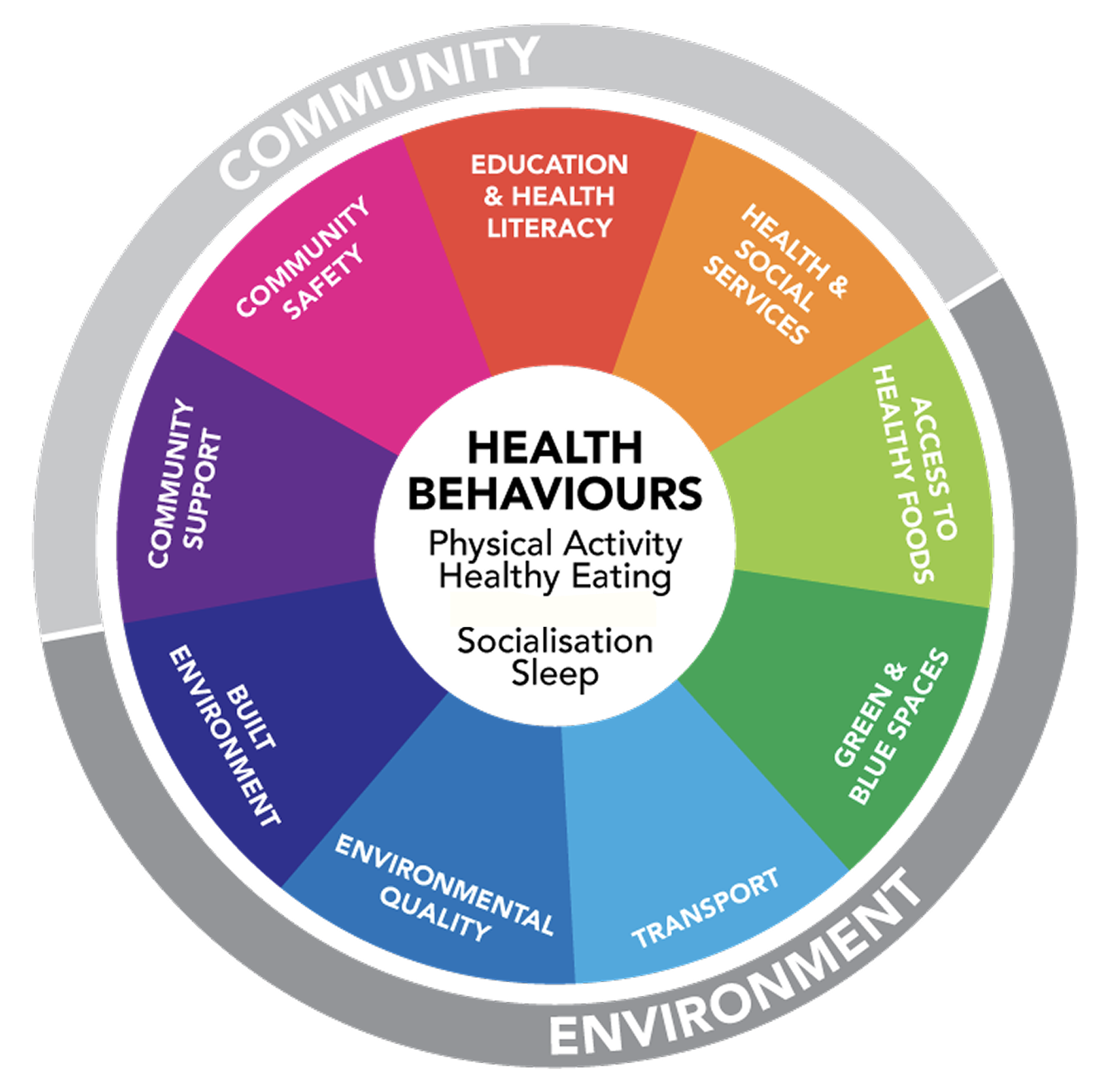
It involves a complex interplay of socio-environmental factors. MOHT identified nine determinants influencing health behaviours within neighbourhoods. However, there was a lack of understanding of how these determinants affect residents' daily routines and health choices. This gap hindered the development of effective, targeted interventions to promote healthier lifestyles.
Nine determinants, four behaviours. The framework we set out to understand, and the gap in knowing how it played out in daily life.
Environmental audit
Mapping what the neighbourhood actually offered.
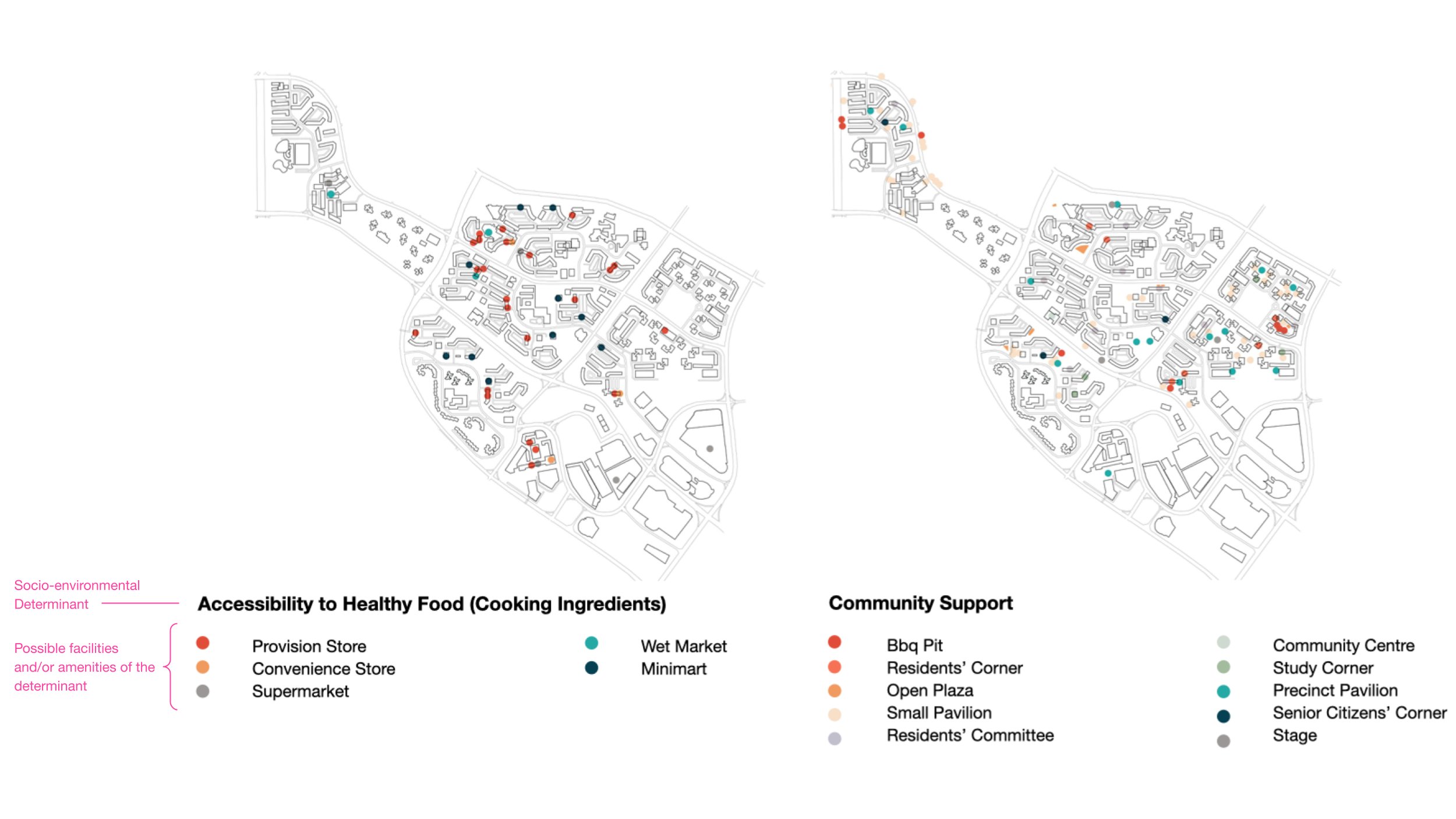
We identified the facilities and amenities corresponding to each of the nine socio-environmental determinants. Utilising government-related websites such as URA and Onemap.sg, we mapped these elements within the neighbourhood. Onsite evaluations were then conducted to assess the quality and accessibility of these resources. This audit provided a tangible understanding of the environmental factors influencing residents' health behaviours.
The environmental audit. Facilities mapped to each determinant, then assessed on quality and accessibility on the ground.
Community needs assessment
Listening before asking.
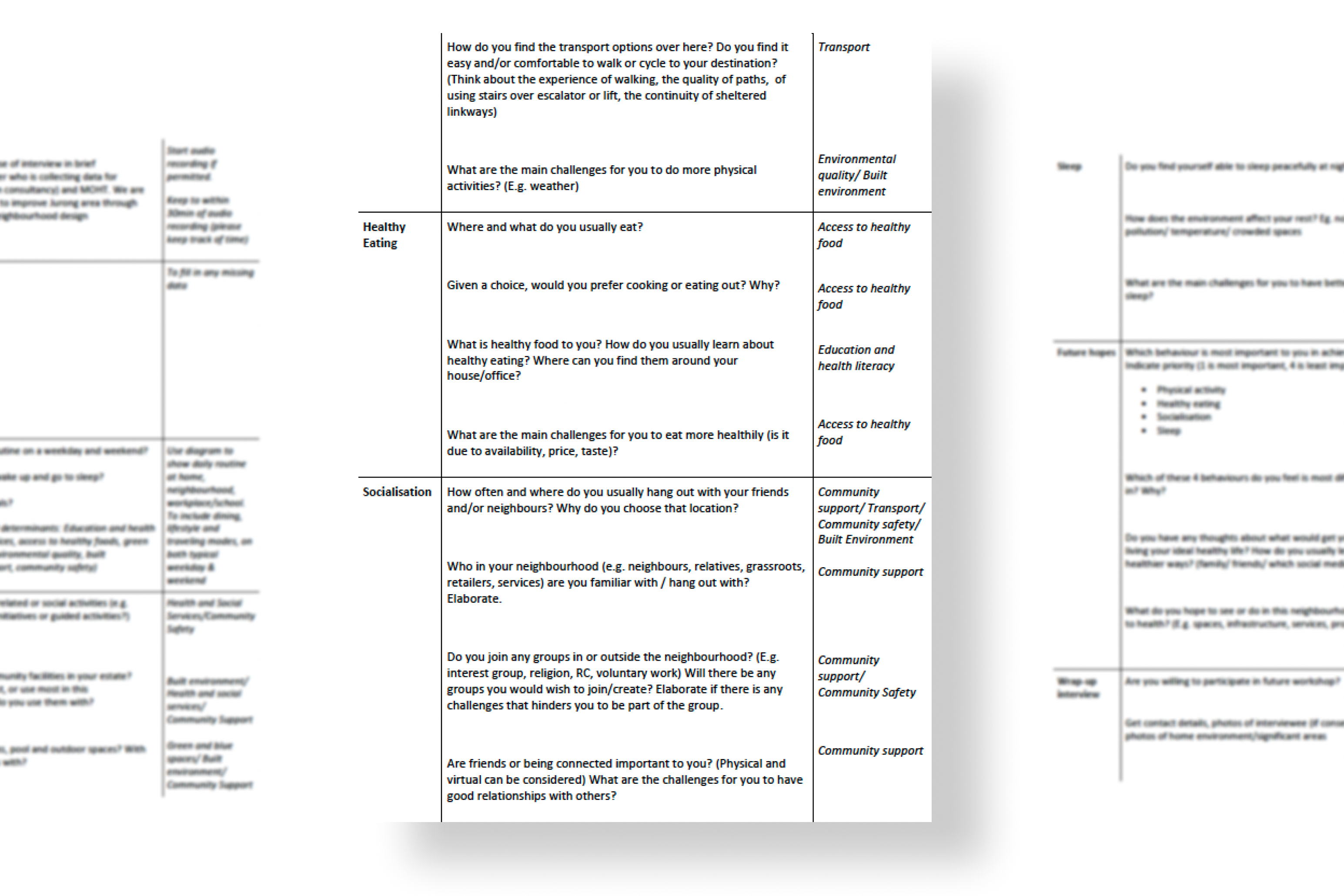
To empathise with residents, we conducted informal, unstructured interviews to gauge sentiments regarding the four key health behaviours. This preliminary understanding informed the development of a semi-structured interview guide with open-ended questions designed to elicit in-depth responses related to the nine determinants.
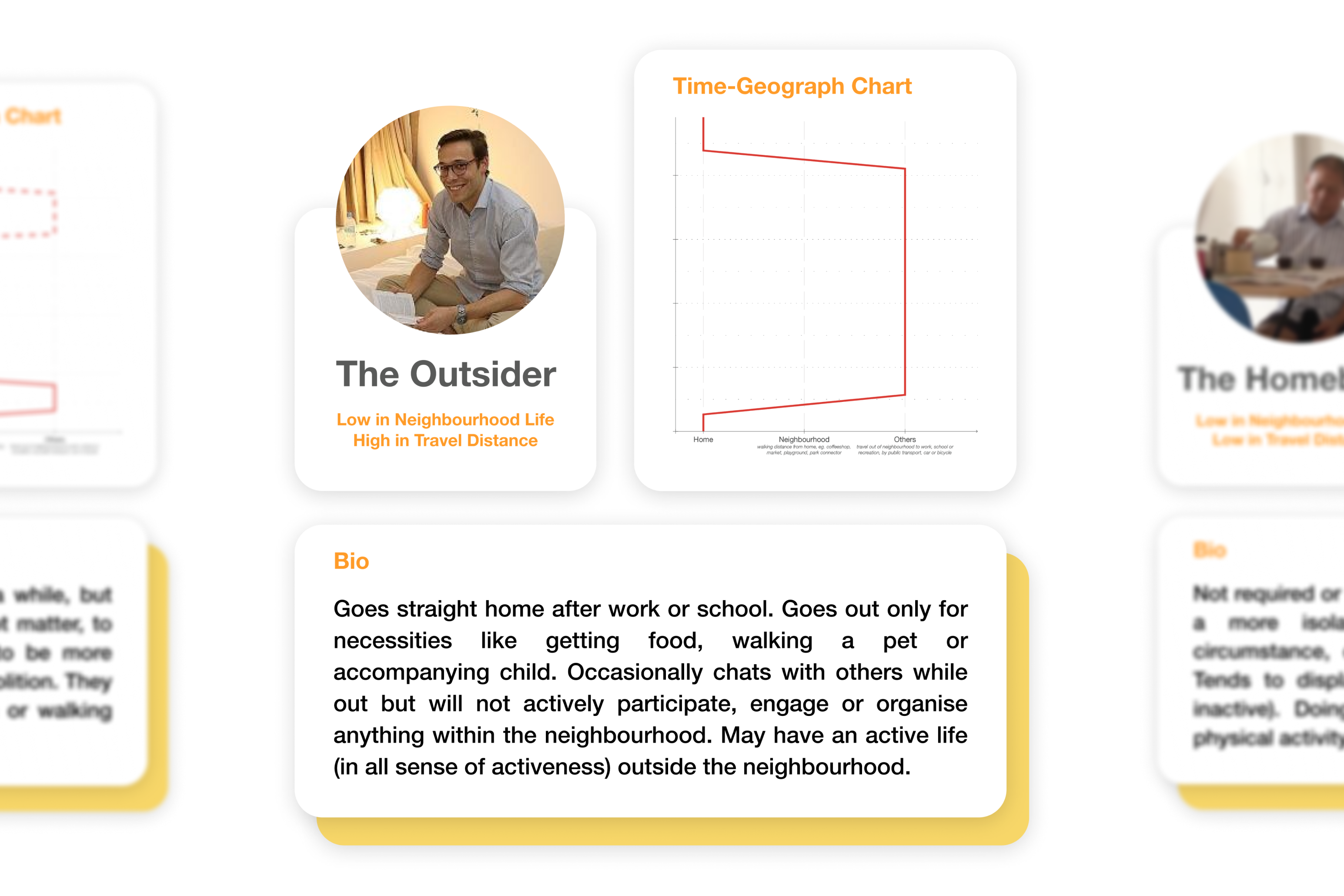
Through the semi-structured interviews, we also asked residents to detail their daily routines, which we mapped using time-geography charts to visualise the interplay between activities, locations, and health behaviours.
Data synthesis
100 interviews, four archetypes.
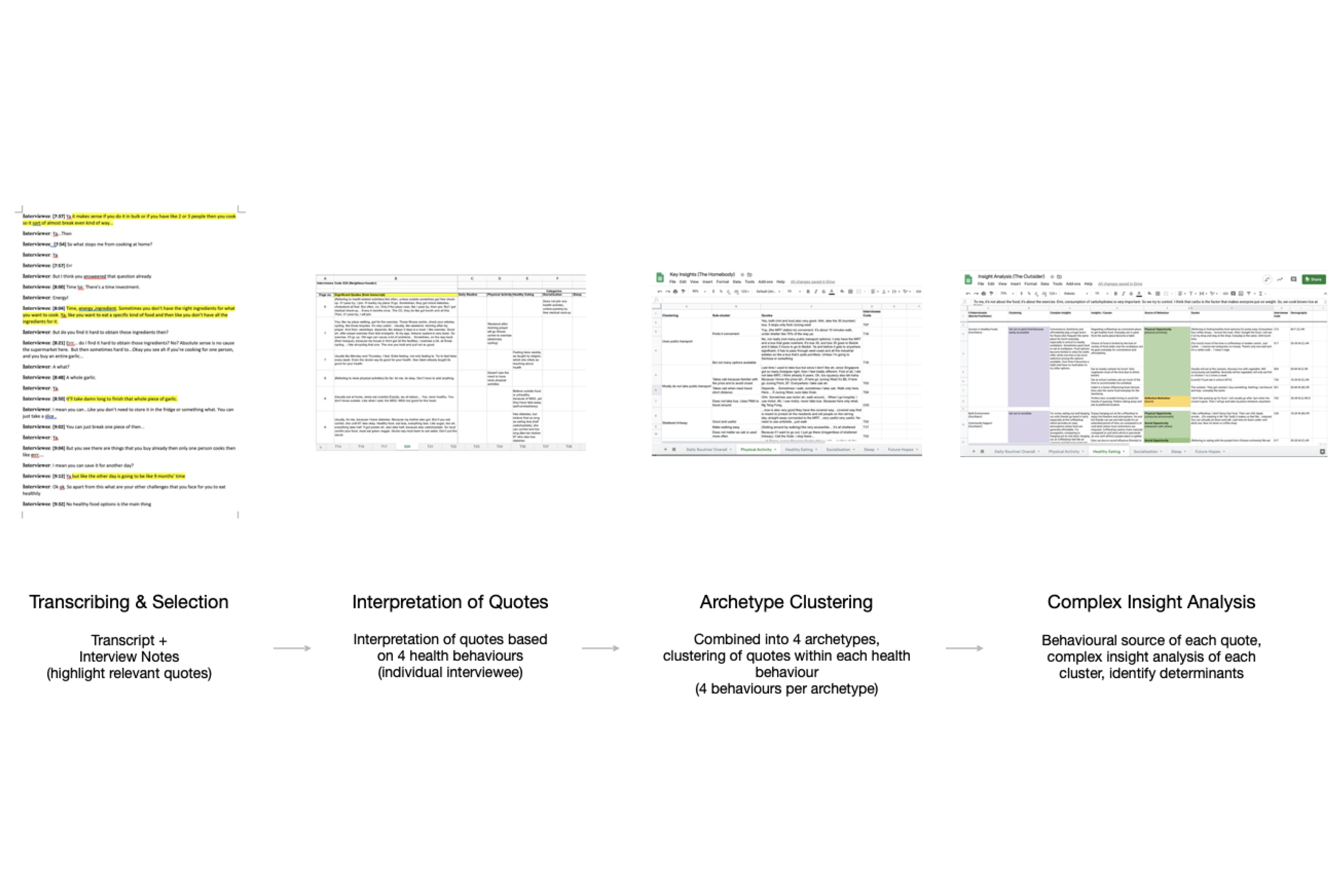
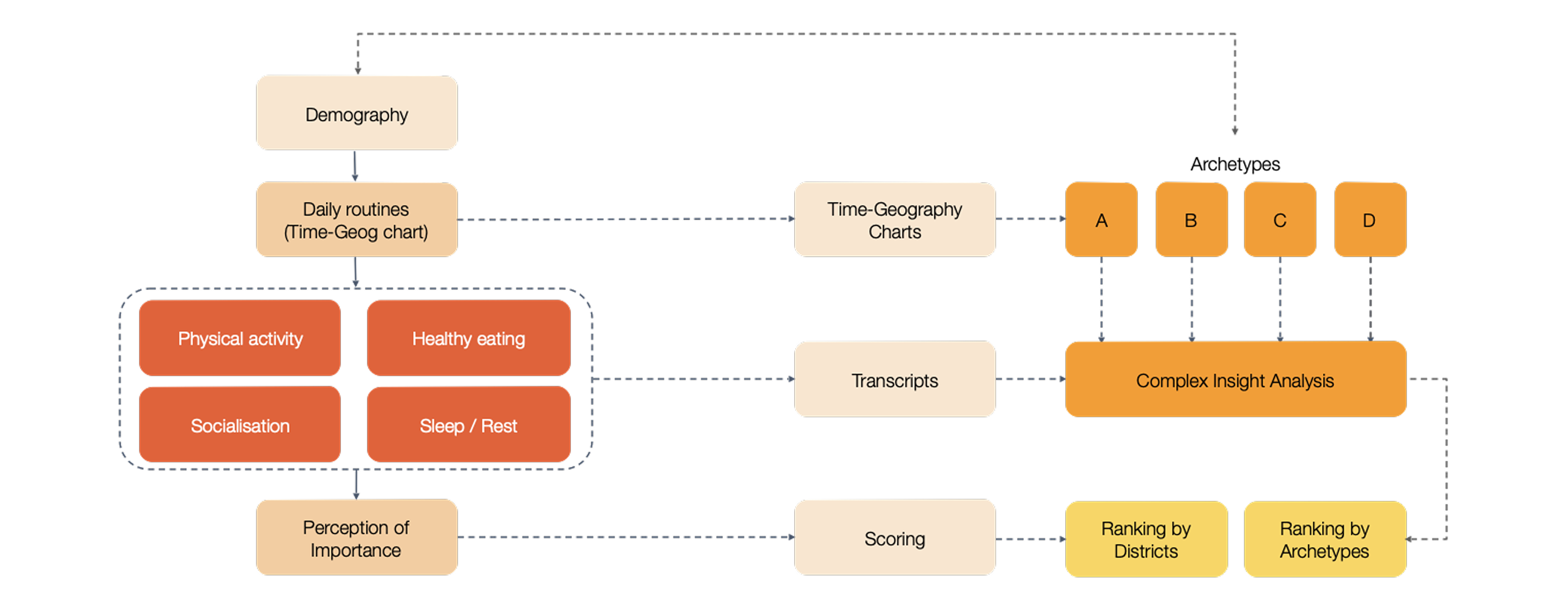
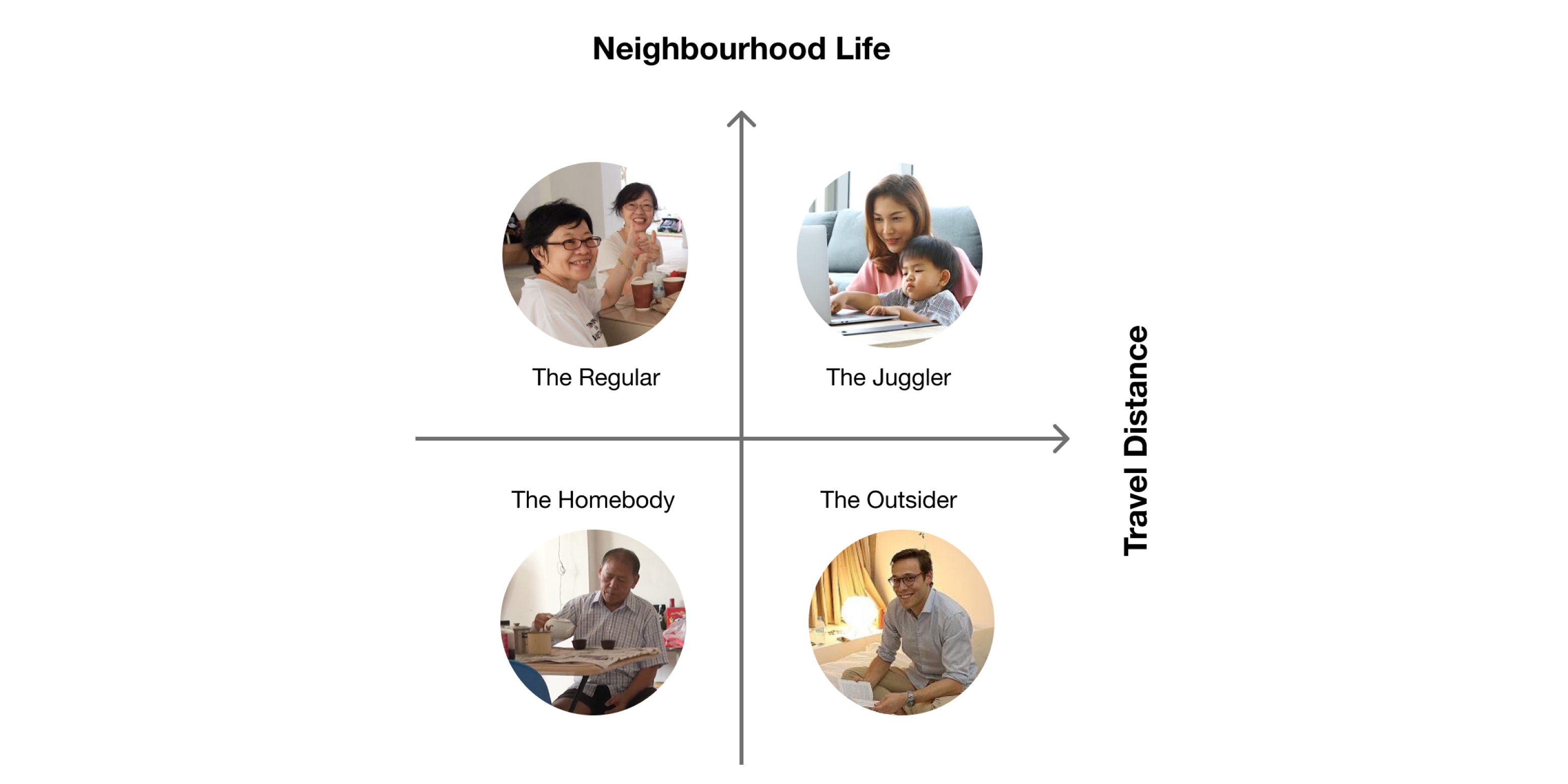
Overall, we managed to engage in 100 interviews. Analysing them, we synthesised the qualitative data to identify patterns and archetypes among residents. By plotting time-geography charts, we categorised residents into four archetypes:
the Homebody
the Regular
the Juggler
the Outsider
Each archetype was situated within a Travel Distance – Neighbourhood Life graph, illustrating varying degrees of neighbourhood engagement and mobility. This clustering was integral to formulating problem statements and tailoring interventions.
How we synthesised. The path from raw interviews to patterns.
The four archetypes, plotted on a Travel Distance – Neighbourhood Life graph.
A resident archetype in detail. Grounding the clusters in real, recognisable lives.
Community validation
Validating over coffee breaks.
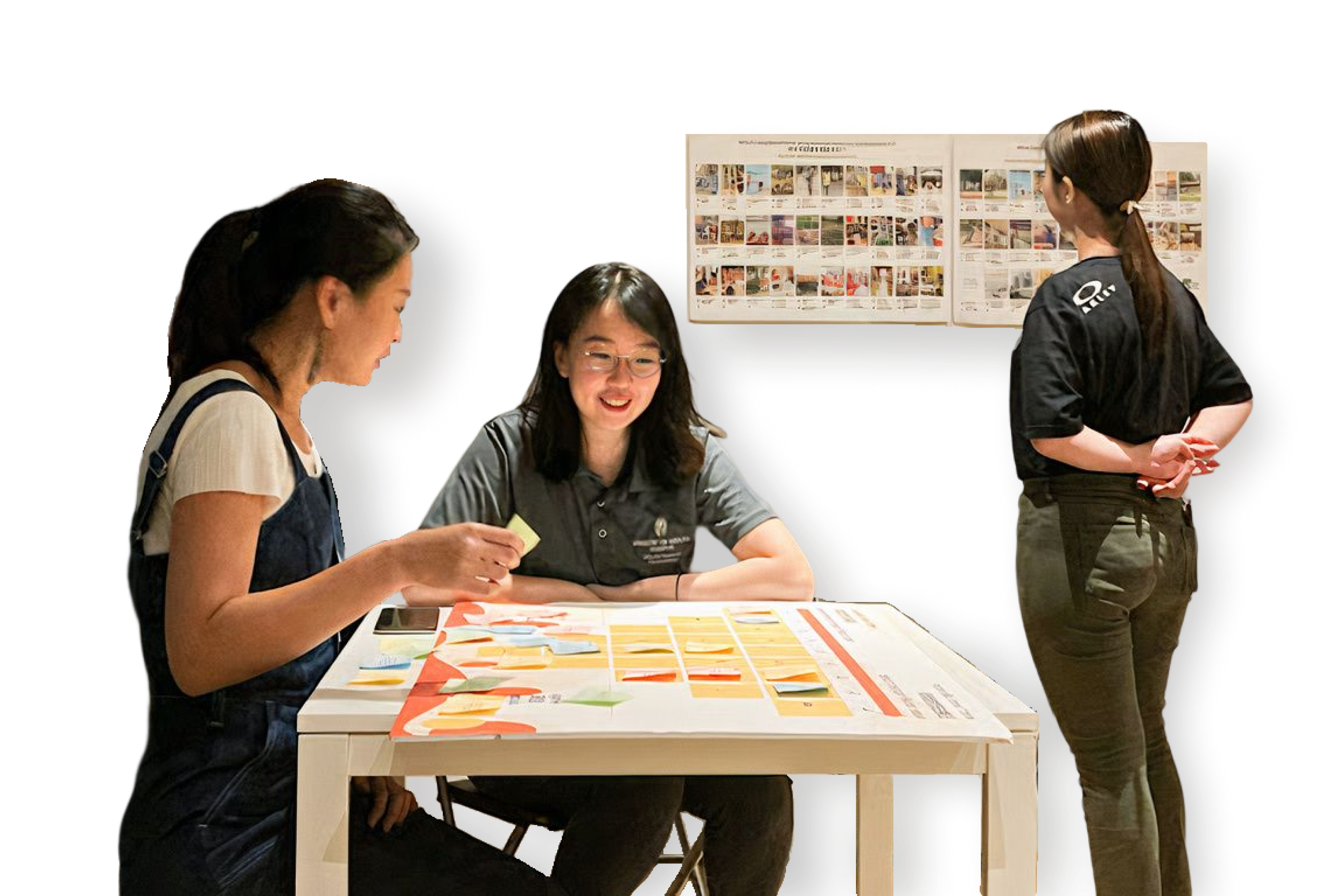
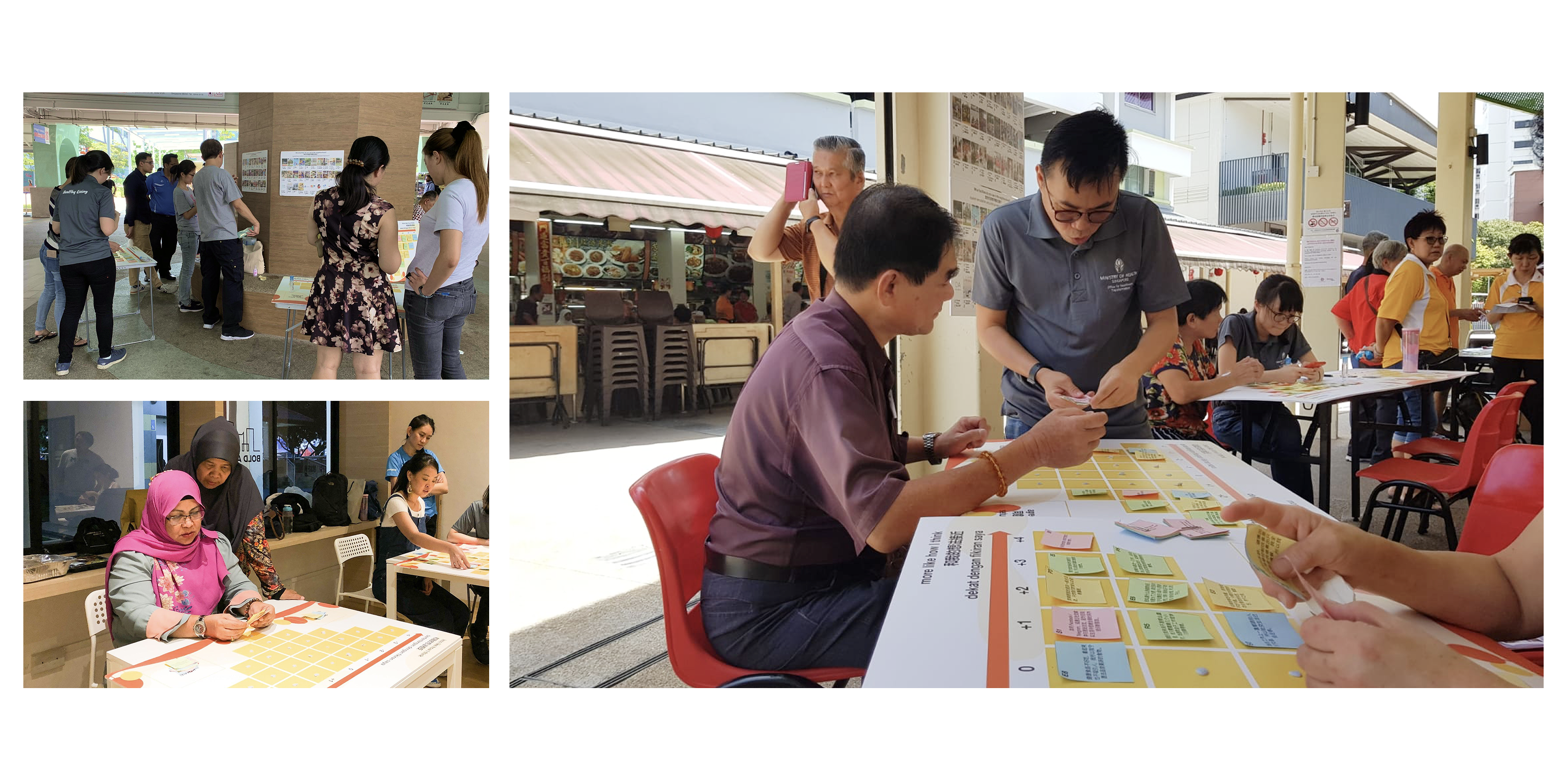
After synthesising data from the initial 100 interviews and identifying patterns and archetypes, we conducted informal "Kopi Chats" to validate our findings and gather deeper, anecdotal insights. These relaxed, face-to-face conversations with residents were held in familiar, neighbourhood settings over coffee break, creating a comfortable space for open dialogue.
Kopi Chats. Validating archetypes with residents, in their own neighbourhoods, over coffee.
During these chats, we explored how the nine socio-environmental determinants aligned with 120 residents' lived experiences and behaviours. This phase allowed us to validate our archetypes against real-world behaviours, uncover additional nuances and edge cases that were not apparent in the initial interviews, and build empathy by engaging with residents directly. The Kopi Chats reinforced our earlier findings and provided actionable feedback to refine the problem statements and potential interventions further.
Outcome
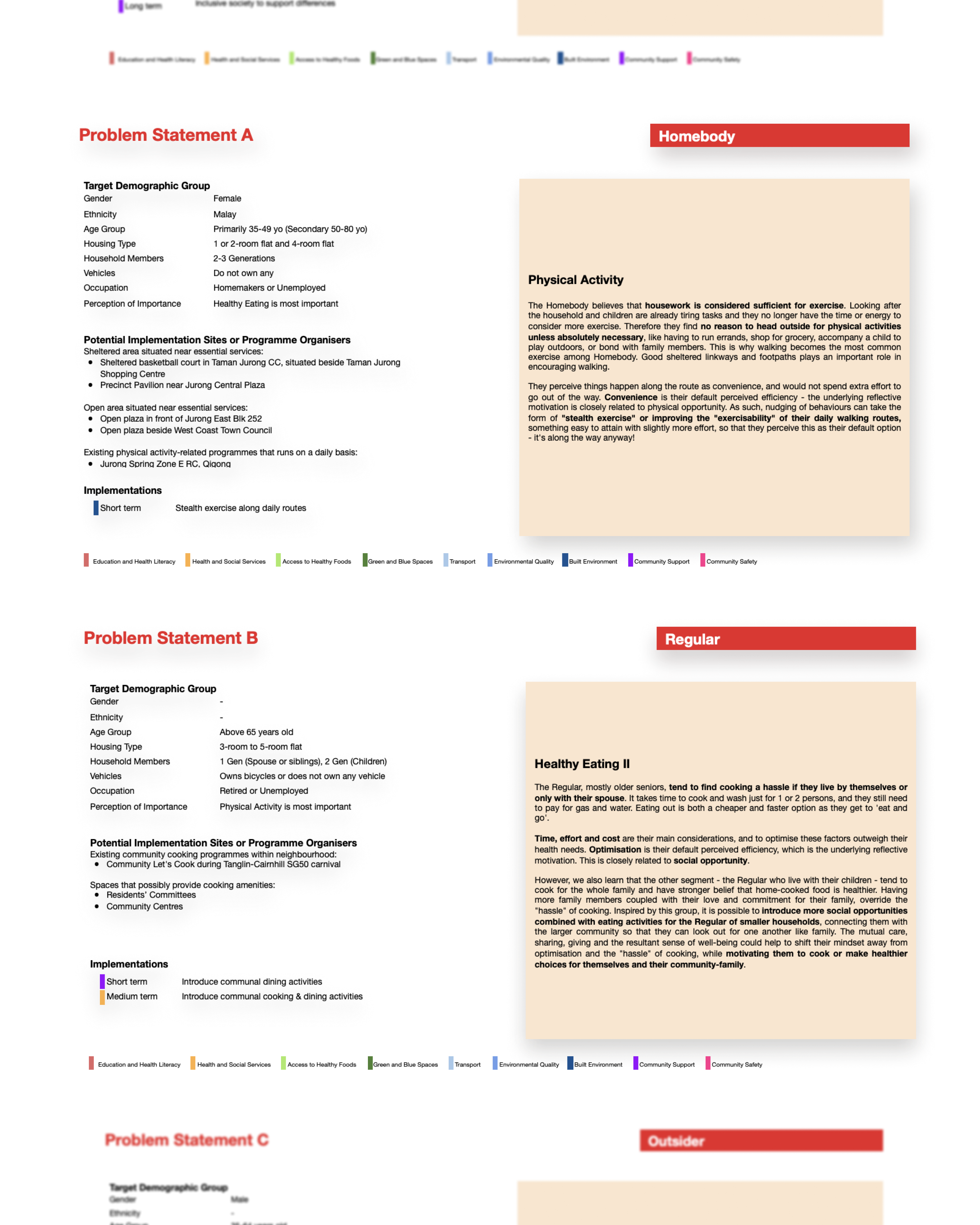
25 problem statements for Phase 2.
Our work culminated in the creation of 25 detailed problem statements, each outlining the health behaviour and determinant(s) addressed, the gaps and opportunities within the neighbourhood environment, and suggested interventions such as programmatic activities or infrastructural improvements.
These statements served as actionable insights for MOHT, providing a foundation for Phase 2, where targeted interventions would be piloted in selected neighbourhoods.
The deliverable. Twenty five problem statements, each tying a behaviour and determinant to a concrete opportunity.
Takeaways
Empathy through engagement
Speaking directly with residents during the "kopi chats" offered invaluable insights into how they truly experience their neighbourhoods. These informal conversations not only validated our research but also revealed nuances and edge cases that couldn't be captured through data alone.
Data-driven decision making
Combining environmental audits with qualitative interviews enables the formulation of well-rounded, evidence-based problem statements. This taught me the value of integrating quantitative and qualitative methods to ensure that problem statements were both evidence-based and actionable.
Bridging disciplines
This project reinforced the shared principles between Social Architecture and User Experience — both focus on empowering users and creating meaningful engagement. It's a direction I'd love to explore further. This project wouldn't have been possible without the support of my team and bosses (Keng Hua and Fong Ing from COLOURS). Working alongside them was an eye-opening experience, and I'm grateful for the opportunity to grow through their guidance.